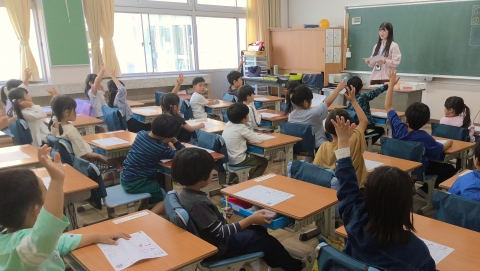
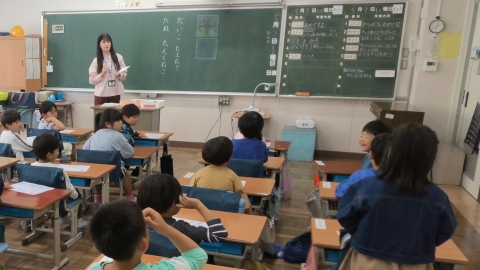
ひらがな「た」を学んでいるようです。プリント教材には「たこ」「たいこ」「たぬき」「たなばた」が例示されています。先生が「七夕は何月何日か知ってる?」というと、子どもたちは一斉に手をあげます。
他に「た」のつく言葉を知っているか問うと、「たまねぎ」「たんくねこ」など、子どもたちが発表していました。私は「たんくねこ」は初めて聞きましたが、子どもたちはよく知っているようでした。
10分間でこれだけのことができます。この間、先生からは指示を1回に一つずつ、具体的な動作を交えて出しています。入学して1か月たった1年生に、このルーティーンが身についているようでした。
Please see "Read more" for the translated versions.
ひらがなの「た」を べんきょうしていました。
プリントには、
「たこ」
「たいこ」
「たぬき」
「たなばた」
が ありました。
せんせいが、
「たなばたは なんがつ なのか しって いますか?」
と きくと、こどもたちは みんな てを あげました。
つぎに、
「ほかに 『た』の ことばを しっていますか?」
と きくと、
「たまねぎ」
「たんくねこ」
などを はっぴょうしていました。
わたしは 「たんくねこ」を はじめて ききました。
でも、こどもたちは よく しっているようでした。
つぎに、「た」の かきかたを れんしゅうしました。
ますを 4つに わけます。
はじめに、ゆびで そらに 「た」を かきます。
そのあと、プリントの おおきな もじを ゆびで なぞります。
それから、ふでばこと えんぴつを 1ぽん だします。
しせいを なおします。
そのあと、きょうの ひづけを たしかめて、
プリントに ひづけと なまえを かきます。
10ぷんで、たくさんのことが できました。
せんせいは、1かいに 1つずつ、わかりやすく しじを していました。
にゅうがくして 1かげつの 1ねんせいですが、
このながれが しっかり できていました。
The students were learning the hiragana character “た”.
The worksheet included examples such as:
- tako (octopus)
- taiko (drum)
- tanuki (raccoon dog)
- tanabata (Star Festival)
When the teacher asked, “Do you know what day Tanabata is?” all the children raised their hands at once.
Next, the teacher asked if they knew other words beginning with “た,” and the children answered with words such as:
- tamanegi (onion)
- tanku neko
I had never heard the word “tanku neko” before, but the children seemed very familiar with it.
Then they practiced how to write “た.”
The square was divided into four parts.
First, the children wrote the character in the air with their fingers.
Next, they traced the large character on the worksheet with their fingers.
After that, they took out their pencil cases and one pencil, and corrected their posture.
They also checked today’s date and wrote the date and their names on the worksheet.
They were able to do all of this in just ten minutes.
During this time, the teacher gave one instruction at a time with clear actions.
Even though the first graders had entered school only one month earlier, they already seemed to have learned this routine well.
Los estudiantes estaban aprendiendo la letra hiragana “た”.
En la hoja aparecían ejemplos como:
- tako (pulpo)
- taiko (tambor japonés)
- tanuki
- tanabata (festival de las estrellas)
Cuando la maestra preguntó:
“¿Saben qué día es Tanabata?”
todos los niños levantaron la mano al mismo tiempo.
Después preguntó si conocían otras palabras con “た”, y los niños dijeron:
- tamanegi (cebolla)
- tanku neko
Yo nunca había escuchado “tanku neko”, pero los niños parecían conocerlo muy bien.
Luego practicaron cómo escribir “た”.
Primero escribieron la letra en el aire con el dedo.
Después repasaron la letra grande de la hoja con el dedo.
Luego sacaron el estuche y un lápiz, y corrigieron su postura.
También confirmaron la fecha y escribieron la fecha y su nombre en la hoja.
Pudieron hacer todo esto en solo diez minutos.
La maestra daba una instrucción a la vez y mostraba claramente las acciones.
Aunque los alumnos de primer grado llevaban solo un mes en la escuela, ya parecían haber aprendido bien esta rutina.
As crianças estavam aprendendo o hiragana “た”.
Na folha havia exemplos como:
- tako (polvo)
- taiko (tambor japonês)
- tanuki
- tanabata (festival das estrelas)
Quando a professora perguntou:
“Vocês sabem em que dia é o Tanabata?”
todas as crianças levantaram a mão ao mesmo tempo.
Depois, ela perguntou outras palavras com “た”, e as crianças responderam:
- tamanegi (cebola)
- tanku neko
Eu nunca tinha ouvido “tanku neko”, mas as crianças pareciam conhecer muito bem.
Depois praticaram como escrever “た”.
Primeiro escreveram no ar com o dedo.
Depois passaram o dedo sobre a letra grande da folha.
Em seguida pegaram o estojo e um lápis e corrigiram a postura.
Também conferiram a data de hoje e escreveram a data e o nome na folha.
Conseguiram fazer tudo isso em apenas dez minutos.
Durante esse tempo, a professora dava uma instrução de cada vez e mostrava claramente os movimentos.
Mesmo estando na escola há apenas um mês, os alunos do primeiro ano já pareciam ter aprendido bem essa rotina.
Các em học sinh đang học chữ hiragana “た”.
Trong tờ bài có các ví dụ như:
- tako (bạch tuộc)
- taiko (trống Nhật)
- tanuki
- tanabata (lễ Thất Tịch)
Khi giáo viên hỏi:
“Các em có biết lễ Tanabata là ngày nào không?”
thì tất cả học sinh đều giơ tay.
Sau đó, giáo viên hỏi còn biết từ nào có “た” nữa không, và các em trả lời:
- tamanegi (hành tây)
- tanku neko
Tôi chưa từng nghe từ “tanku neko”, nhưng các em có vẻ rất quen thuộc với từ này.
Tiếp theo, các em luyện cách viết chữ “た”.
Đầu tiên các em viết chữ trên không bằng ngón tay.
Sau đó dùng ngón tay tô theo chữ lớn trên tờ bài.
Tiếp theo, các em lấy hộp bút và một cây bút chì, rồi ngồi lại đúng tư thế.
Các em cũng kiểm tra ngày hôm nay và viết ngày tháng cùng tên của mình vào tờ bài.
Chỉ trong 10 phút mà các em đã làm được rất nhiều việc.
Trong suốt thời gian đó, giáo viên đưa ra từng chỉ dẫn một cách rõ ràng kèm theo động tác cụ thể.
Dù mới vào học được một tháng, học sinh lớp 1 dường như đã quen với quy trình này.
続きを隠す<<


