5月30日(金)、2年生の国語の授業を参観しました。単元は枕草子。この授業は自分流の枕草子(春の章)を書くというパフォーマンス課題です。研修の一環で他の教師も参観しています。
Please see “Read more” for the translated versions.
When you find it difficult to write much, you can expand your content by having someone ask you questions and responding to them.
あまりかけないときは、質問してもらって答えることで、内容をふくらませることができます。
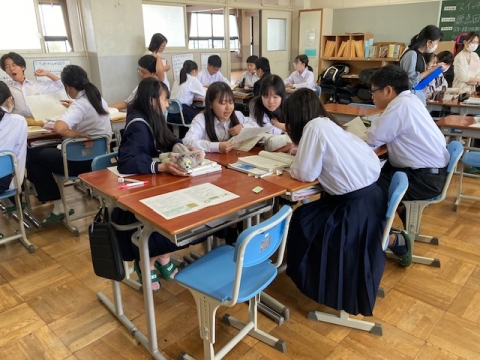
By asking each other questions, the content naturally grows.
お互いに質問。内容がふくらんでいきます。
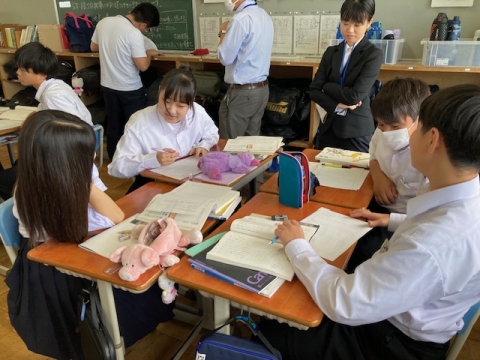
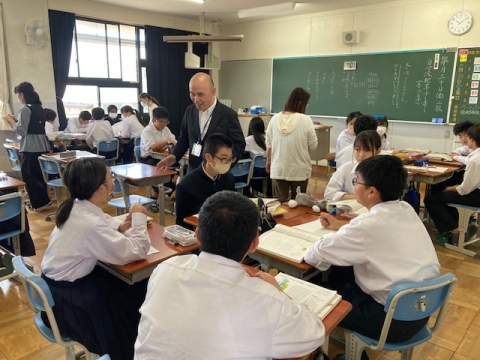
On Friday, May 30, we observed a second-year Japanese language class.
The unit was The Pillow Book. This lesson featured a performance task in which students wrote their own version of The Pillow Book (Spring chapter).
As part of a training program, other teachers were also observing.
El viernes 30 de mayo, observamos una clase de lengua japonesa de segundo año.
La unidad trataba sobre El libro de la almohada (Makura no Sōshi). En esta lección, los estudiantes realizaron una tarea de desempeño que consistía en escribir su propia versión del capítulo de primavera.
Como parte de una capacitación, otros profesores también asistieron como observadores.
मे ३० तारिख शुक्रबार, कक्षा २ को जापानी भाषा (国語) को कक्षा अवलोकन गरियो।
पढाइको विषय माकुरानो सोशी (枕草子, "तकियाको पुस्तक") थियो। यस कक्षामा विद्यार्थीहरूले आफ्नै शैलीमा वसन्तको अध्याय लेख्ने प्रदर्शन-आधारित कार्य (performance task) गरे।
तालिम कार्यक्रमअन्तर्गत अन्य शिक्षकहरूले पनि कक्षा अवलोकन गरे।
Vào thứ Sáu, ngày 30 tháng 5, chúng tôi đã dự giờ môn Quốc ngữ của học sinh năm hai.
Chủ đề của bài học là Makura no Sōshi (枕草子, "Ghi chép gối đầu giường").
Trong tiết học này, học sinh thực hiện một nhiệm vụ thể hiện năng lực bằng cách viết chương mùa xuân theo phong cách riêng của mình.
Là một phần của chương trình tập huấn, các giáo viên khác cũng tham dự quan sát.
続きを隠す<<


 学校紹介
学校紹介 校訓・教育目標


