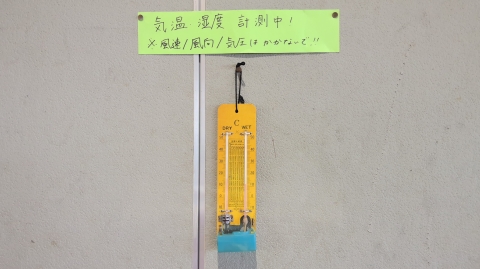
今日は空気が乾燥しているのを肌で感じますね。
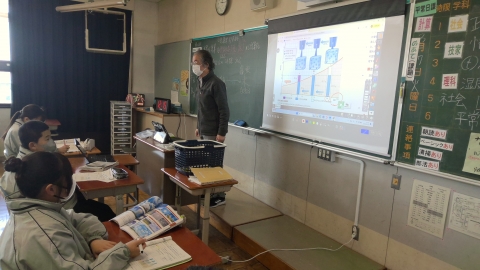
3月17日(火)4限目、2年生の理科では湿度の計算について学んでいました。ここを難しいと考える人が多いかもしれません。理解するためには、空気中の水蒸気量を量的にとらえる見方、気温が下がると飽和水蒸気量も減るという温度と量を関係づける考え方が必要です。
逆に言えば、湿度の計算ができる人は、これらの見方・考え方を身に付けているといえます。
Please see "Read more" for the translated versions.
英語(English)
Today, you can really feel how dry the air is.
In the fourth period on Tuesday, March 17, second-year students in science class were learning how to calculate humidity. Many students may find this topic difficult. To understand it, it is important to think of the amount of water vapor in the air quantitatively and to understand the relationship between temperature and amount—specifically, that when the temperature decreases, the maximum amount of water vapor the air can hold (saturated water vapor) also decreases.
In other words, students who can calculate humidity have developed these ways of thinking and understanding.
スペイン語(Español)
Hoy se puede sentir en la piel que el aire está seco.
En la cuarta hora del martes 17 de marzo, los estudiantes de segundo año, en la clase de ciencias, estaban aprendiendo a calcular la humedad. Muchas personas pueden considerar este tema difícil. Para comprenderlo, es necesario entender la cantidad de vapor de agua en el aire de manera cuantitativa y relacionar la temperatura con la cantidad, es decir, que cuando la temperatura baja, también disminuye la cantidad máxima de vapor de agua que el aire puede contener.
En otras palabras, quienes pueden calcular la humedad han adquirido estas formas de pensar y comprender.
ネパール語(नेपाली)
आज हावामा सुक्खापन भएको कुरा छालाबाट नै महसुस गर्न सकिन्छ।
मार्च १७ मंगलबार चौथो घण्टामा, दोस्रो वर्षका विद्यार्थीहरूले विज्ञान कक्षामा आर्द्रता (ह्युमिडिटी) को गणना सिकिरहेका थिए। धेरैलाई यो भाग गाह्रो लाग्न सक्छ। यसलाई बुझ्नका लागि हावामा रहेको पानीको बाफको मात्रालाई परिमाणको रूपमा बुझ्ने दृष्टिकोण र तापक्रम घट्दा हावाले धारण गर्न सक्ने अधिकतम पानीको बाफ (सन्तृप्त वाष्प मात्रा) पनि घट्छ भन्ने तापक्रम र परिमाणबीचको सम्बन्ध बुझ्न आवश्यक हुन्छ।
अर्को शब्दमा भन्नुपर्दा, आर्द्रताको गणना गर्न सक्ने व्यक्तिले यी सोच्ने तरिका र बुझाइ हासिल गरेको हुन्छ।
ベトナム語(Tiếng Việt)
Hôm nay có thể cảm nhận rõ không khí khô qua làn da.
Trong tiết 4 vào thứ Ba, ngày 17 tháng 3, học sinh lớp 2 trong giờ khoa học đã học về cách tính độ ẩm. Nhiều người có thể thấy phần này khá khó. Để hiểu được, cần có cách nhìn định lượng về lượng hơi nước trong không khí, đồng thời hiểu mối quan hệ giữa nhiệt độ và lượng hơi nước—tức là khi nhiệt độ giảm, lượng hơi nước tối đa mà không khí có thể chứa (độ bão hòa) cũng giảm.
Nói cách khác, những học sinh có thể tính được độ ẩm là những em đã nắm được cách nhìn và cách suy nghĩ này.
続きを隠す<<


 学校紹介
学校紹介 校訓・教育目標


