5月19日(月)8:49、南海トラフ地震を想定した訓練を行いました。前回と同様、机の下で揺れが収まるのを待ち、合図で運動場へ一次避難します。ここまでは、4月9日(水)に行った第1回の避難訓練と同じです。
今回は前回とは違う試みを行っています。まず、運動場への一次避難はスリッパのまま行いますが、その後の避難を安全に行うため体育館シューズを持参しています。そして大きく違うのは、屋上に二次避難するのではなく、できるだけ内陸部へ二次避難を行うことです。これは本校では初めての試みです。
富洲原中学校は南海トラフ地震の津波に対し屋上への垂直避難が可能です。しかし、津波到達後の孤立や二次災害を避けることはもちろん、救助活動の負担軽減のためにも、誰もができるだけ自力で安全な場所まで避難することが望まれます。
Please see “Read more” for the translated versions and 9 photos.
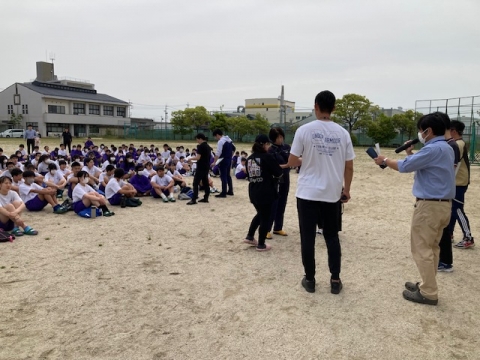
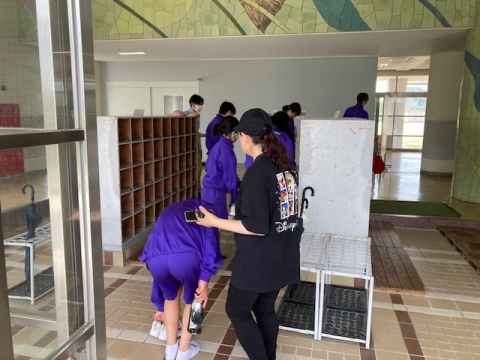
スリッパのまま運動場へ一時避難。体育館シューズと水筒を持参。今回はやりませんが、ここで体育館シューズに履き替えることを想定しています。(8:55)
Temporary evacuation to the schoolyard in slippers. Students brought their gym shoes and water bottles. Although we did not do so this time, it is assumed that students would change into their gym shoes at this point.
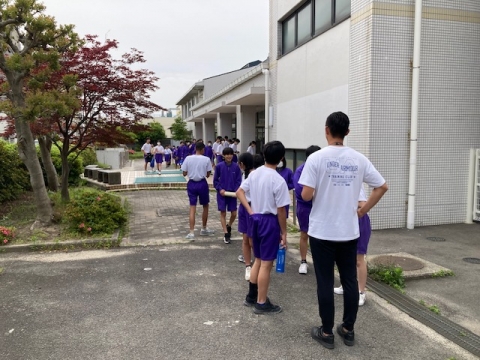
これからあさけプラザに向かいます。スリッパから靴に履き替えるのに時間がかかっています。(9:00)
We are now heading toward Asake Plaza. It is taking some time for students to change from slippers to shoes.
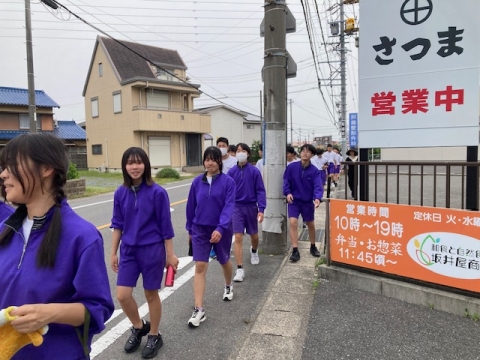
今回の避難経路では、この辺りは歩道が設置されておらず、少し遠回りしてしまっているようです。(9:42)
Along this evacuation route, there are no sidewalks in some areas. And we took a slightly longer detour.
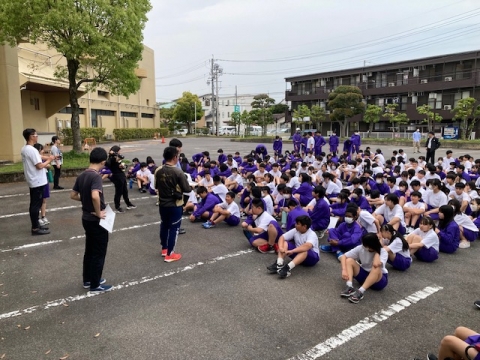
あさけプラザへの避難完了。最初のクラスが到着してから9分ほど経過しています。(10:01)
Evacuation to Asake Plaza is complete. It has been about 9 minutes since the first class arrived.
学校に向かって出発。経路を少し変更しています。(10:17)
Departure back to school. The route has been slightly changed.

学校へ戻るところ(10:37)
Returning to school.

一番後ろから来てくれた3年A組の最後尾が到着(11:09)
The last group, Class 3-A at the end of the line, has arrived.
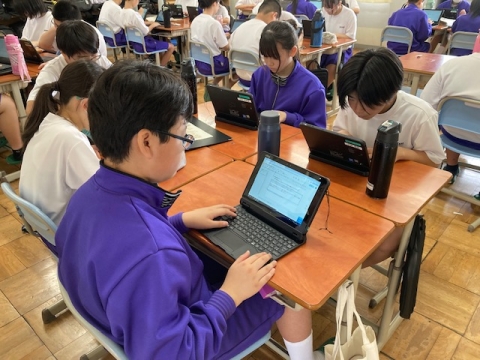
教室で今回の避難訓練を振り返っています。
Students are now reflecting on today’s evacuation drill in their classrooms.
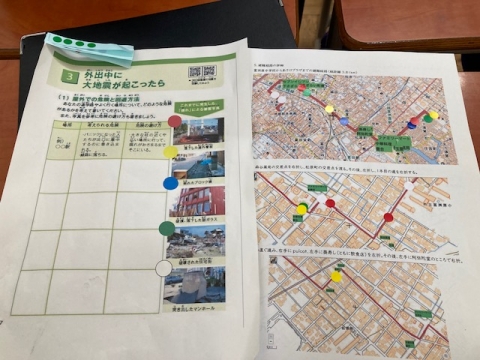
大地震が発生した時に考えられる避難経路上の危険をチェックしてきました。
We checked for possible dangers along the evacuation route in the event of a major earthquake.
On Monday, May 19 at 8:49 a.m., we conducted a drill simulating a Nankai Trough earthquake.
As in the previous drill, students waited under their desks for the shaking to subside and then evacuated to the schoolyard at the signal. Up to this point, the procedure was the same as the first evacuation drill conducted on Wednesday, April 9.
This time, however, we implemented a different approach. First, the initial evacuation to the schoolyard was done in slippers, but students brought their gym shoes with them to ensure safety for the next stage. The biggest difference is that instead of evacuating vertically to the rooftop, we conducted a secondary evacuation inland. This is the first time our school has tried this.
Tomisuhara Junior High School is capable of vertical evacuation to the rooftop in the event of a tsunami caused by a Nankai Trough earthquake. However, to avoid isolation after the tsunami and secondary disasters—and to reduce the burden on rescue operations—it is ideal for everyone to evacuate to a safe inland area on their own if possible.
We will evaluate this trial and use it to develop a better evacuation plan.
El lunes 19 de mayo a las 8:49 a.m., realizamos un simulacro suponiendo un terremoto de la Fosa de Nankai.
Como en el simulacro anterior, los estudiantes esperaron debajo de sus escritorios hasta que pasaran los temblores y luego evacuaron al patio escolar cuando se dio la señal. Hasta este punto, el procedimiento fue igual al del primer simulacro realizado el miércoles 9 de abril.
Sin embargo, esta vez intentamos algo diferente. Primero, la evacuación inicial al patio se hizo en pantuflas, pero los estudiantes llevaron consigo sus zapatillas de gimnasia para garantizar la seguridad en la siguiente etapa. La diferencia principal fue que, en lugar de evacuar verticalmente al techo, realizamos una evacuación secundaria hacia el interior. Esta es la primera vez que nuestra escuela realiza este tipo de ejercicio.
La Escuela Secundaria Tomisuhara permite evacuar al techo en caso de un tsunami causado por un terremoto de la Fosa de Nankai. Sin embargo, para evitar el aislamiento después del tsunami y los desastres secundarios, y para reducir la carga de las operaciones de rescate, se considera ideal que todos evacúen por su cuenta a un lugar seguro tierra adentro.
Evaluaremos este ejercicio y trabajaremos en un plan de evacuación mejorado.
मे १९ (सोमबार) बिहान ८:४९ बजे, हामीले नन्काई ट्रफ भूकम्पलाई ध्यानमा राखी एक अभ्यास सम्पन्न गर्यौं।
अघिल्लो अभ्यासझैं, विद्यार्थीहरूले डेस्कमुनि बस्दै कम्पन रोकिएपछि सिग्नल पाउने बित्तिकै मैदानतर्फ पहिलो चरणको避難 (उद्धार अभ्यास) गरे। यो प्रक्रियासम्म अप्रिल ९ (बुधबार) मा गरिएको पहिलो避難 अभ्याससँग मिल्दोजुल्दो थियो।
तर, यसपटक केही नयाँ प्रयास गरिएको छ। पहिलो चरणको避難 चप्पलमै गरिएको थियो, तर त्यसपछि सुरक्षित रूपमा避難 गर्न विद्यार्थीहरूले आफ्नो जिम शूज बोकेका थिए। सबैभन्दा ठूलो फरक के भने, यसपटक छानामा जानुको सट्टा हामीले भित्री भागतिर दोस्रो चरणको避難 गरेका छौं। यो हाम्रो विद्यालयमा पहिलो पटक गरिएको हो।
टोमिसुहारा जुनियर हाई स्कूलले नन्काई ट्रफ भूकम्पबाट उत्पन्न सुनामीको समयमा छानातर्फ सिधा避難 गर्ने क्षमता राख्दछ। तर, सुनामीपछिको एक्लोपन र दोस्रो चरणको जोखिमबाट बच्न र उद्धार कार्यमा सहयोग पुगोस् भनेर, सकेसम्म सबैले आफैं सुरक्षित स्थानतर्फ避難 गर्नु वाञ्छनीय मानिन्छ।
यो अभ्यासको मूल्याङ्कन गरेर हामी अझ राम्रो避難 योजना तयार पार्नेछौं।
Vào lúc 8:49 sáng thứ Hai, ngày 19 tháng 5, chúng tôi đã tiến hành một buổi diễn tập giả định trận động đất đới Nankai.
Cũng giống như lần trước, học sinh chờ dưới gầm bàn cho đến khi hết rung lắc, sau đó sơ tán tạm thời ra sân trường khi có tín hiệu. Đến bước này, quy trình giống với buổi diễn tập đầu tiên được thực hiện vào thứ Tư, ngày 9 tháng 4.
Tuy nhiên, lần này chúng tôi đã thử một phương pháp khác. Việc sơ tán lần đầu ra sân trường được thực hiện khi vẫn mang dép trong nhà, nhưng để đảm bảo an toàn cho bước tiếp theo, học sinh mang theo giày thể dục. Sự khác biệt lớn nhất là lần này, thay vì sơ tán lên mái nhà, chúng tôi tiến hành sơ tán theo phương ngang về phía đất liền. Đây là lần đầu tiên trường chúng tôi thực hiện điều này.
Trường Trung học cơ sở Tomisuhara có khả năng sơ tán lên mái nhà trong trường hợp có sóng thần do động đất đới Nankai gây ra. Tuy nhiên, để tránh bị cô lập sau sóng thần, phòng ngừa tai nạn thứ cấp, và giảm gánh nặng cho lực lượng cứu hộ, việc mọi người có thể tự mình di chuyển đến nơi an toàn trên đất liền là điều lý tưởng.
Chúng tôi sẽ đánh giá thử nghiệm lần này và xây dựng kế hoạch sơ tán tốt hơn.
続きを隠す<<


 学校紹介
学校紹介 校訓・教育目標


