Please see “Read more” for the translated versions and more photos.
実はこれらは美術の立体作品。粘土に絵の具を混ぜて作ってあります。皿に置いたり、ケースに入れたりすれば、本物そっくりに見えます。先程の写真は先生がつくった見本です。
8案から4案に絞って制作。すでに制作している人もいます。
Narrowed down from 8 ideas to 4 for production. Some students have already started working on theirs.
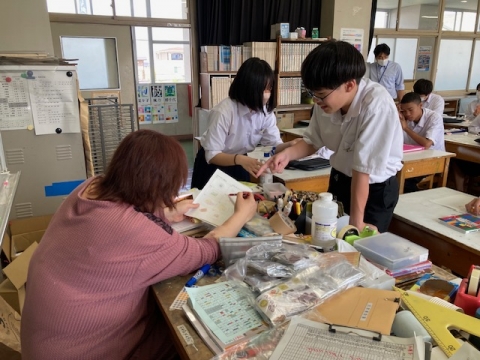
先生にアイデアを見てもらっています。
They are showing their ideas to the teacher for feedback.
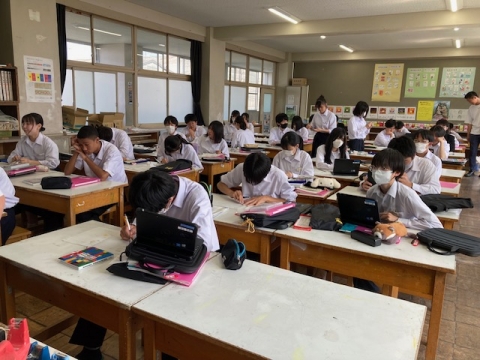
On the afternoon of Tuesday, May 20, the third-year students are making traditional Japanese sweets (wagashi).
In fact, these are three-dimensional art projects. They are made by mixing paint into clay.
When placed on a plate or in a display case, they look just like the real thing.
The photo shown earlier is a sample made by the teacher.
En la tarde del martes 20 de mayo, los estudiantes de tercer año están haciendo dulces tradicionales japoneses (wagashi).
En realidad, se trata de obras de arte tridimensionales. Están hechas mezclando pintura con arcilla.
Cuando se colocan en un plato o en una vitrina, parecen reales.
La foto mostrada anteriormente es una muestra hecha por el profesor.
मे २० (मंगलबार) को अपराह्न, कक्षा ३ का विद्यार्थीहरू जापानी परम्परागत मिठाइ (वागाशी) बनाइरहेका छन्।
वास्तवमा, यी तिन-आयामिक कला परियोजनाहरू हुन्। माटोमा रङ मिसाएर बनाइएको हो।
प्लेटमा राख्दा वा केसमा राख्दा तिनीहरू साँच्चिकै जस्तै देखिन्छन्।
पहिले देखाइएको फोटो शिक्षकले बनाएको नमूना हो।
Vào chiều thứ Ba, ngày 20 tháng 5, các học sinh lớp 9 đang làm bánh ngọt truyền thống Nhật Bản (wagashi).
Thực ra, đây là tác phẩm nghệ thuật 3D. Các em đã trộn đất sét với màu vẽ để tạo thành.
Khi đặt lên đĩa hoặc vào hộp trưng bày, chúng trông giống hệt như thật.
Bức ảnh vừa rồi là mẫu do thầy giáo làm.
続きを隠す<<


 学校紹介
学校紹介 校訓・教育目標


